
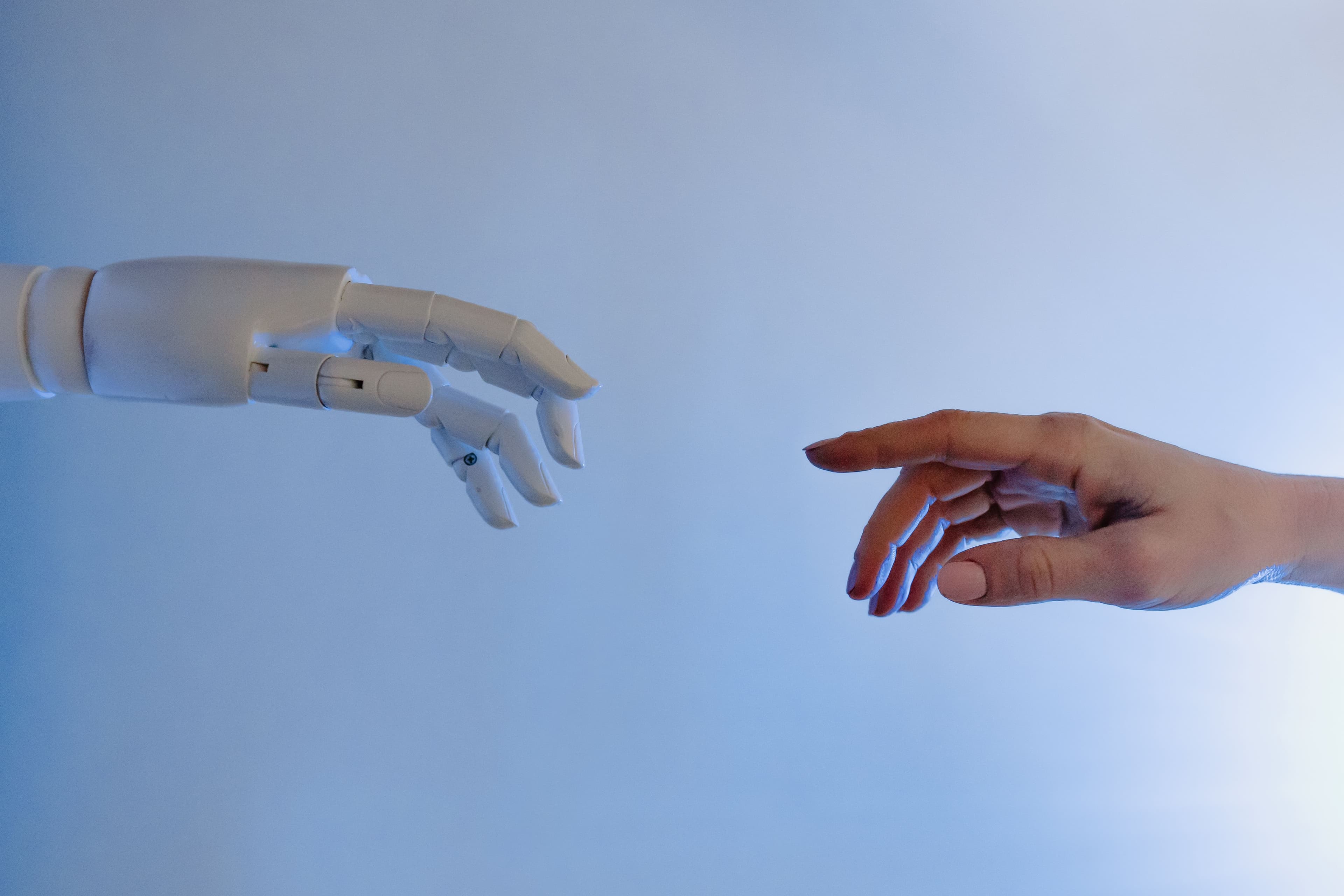
AI and the Future of Online Debates
AI and the Future of Online Debates
Online debate used to mean two people typing back and forth, each limited by their own knowledge, memory, and speed of research. That's no longer the full picture. AI tools can now generate arguments instantly, fact-check claims in real time, summarize entire threads, and in some cases, debate a human directly. The shape of online argument is changing quickly, and it's worth understanding both what's genuinely improving and what's getting more complicated.
What AI Is Already Changing
Instant fact-checking. A claim that once took minutes of searching to verify can now be checked almost immediately. This raises the cost of making a sloppy or unsupported claim online, since a response can arrive with a source attached within seconds.
Argument generation. AI tools can produce a reasonably structured argument on almost any topic in moments — including arguments the user doesn't actually hold, purely to test their strength. This has real educational value: it's a fast way to see the strongest version of an opposing position, similar to the steelmanning process used in formal debate.
Summarization of long threads. Online debates often sprawl across dozens of replies, losing track of the original claim. AI summarization can compress that sprawl back into a clear claim-evidence-rebuttal structure, making it easier to see where the actual disagreement lies versus where people have simply talked past each other.
AI as a debate partner. Some tools now let a person argue directly against an AI taking an opposing position, on demand, without needing to find a human opponent. This makes deliberate practice at debate available on a timeline no human sparring partner could match.
What's Getting More Complicated
Determining whether an argument is genuinely human. As AI-generated arguments become harder to distinguish from human-written ones, online debates increasingly involve some uncertainty about whether a participant's response reflects their own reasoning or an AI's. This is a genuinely contested and evolving issue, without a settled answer yet about how it should be handled or disclosed.
Volume over quality. The same tools that make it easy to generate one strong argument also make it easy to generate many mediocre ones quickly, which can shift online debates toward whoever can produce more content rather than whoever has the stronger underlying case.
Reliance risk. There's a legitimate concern that leaning on AI to generate or fact-check arguments could reduce a person's own practice at the underlying skills — reasoning, retrieval, and structuring an argument — the same way any tool that removes friction can also remove the repetition that builds a skill in the first place. This is debated among educators and researchers, and reasonable people land in different places on how much of a risk it actually poses.
Where This Connects to Learning
Whichever way the debate over AI's role in online argument goes, the underlying skills it interacts with — structuring a claim, connecting evidence to a conclusion, anticipating a counterargument — are the same ones covered in debate preparation and critical thinking generally. AI can accelerate parts of that process, like generating a first draft of a counterargument to test against, but it doesn't replace the practice of evaluating whether an argument's structure actually holds up.
This is where visual approaches to studying arguments, the kind Biftech applies to dense material generally, stay relevant regardless of how AI changes online debate. Mapping out a claim, its evidence, and its rebuttal is still the fastest way to spot whether an argument (AI-generated or not) actually holds together — the tool that produced the argument doesn't change whether the underlying logic is sound.
Practical Ways to Use AI in Debate Practice Without Losing the Skill
- Use AI to generate the opposing side, then evaluate it yourself. Treat the output as a steelman to practice against, not a shortcut past the practice itself.
- Fact-check the fact-checker. AI-generated citations and claims aren't automatically correct — verifying them is still a critical thinking exercise, not a step to skip.
- Practice building your own argument before checking an AI's version. Comparing your structure against an AI-generated one afterward is a stronger learning exercise than starting from the AI's output.
- Watch for volume replacing quality in real debates. A long, AI-assisted reply isn't automatically a stronger one — the same claim-evidence-warrant check applies regardless of how fast the argument was produced.
The Bottom Line
AI is genuinely changing what online debate looks like — faster fact-checking, instant argument generation, and AI debate partners are already here, and the harder questions around authenticity and reliance are still being worked out. What hasn't changed is the underlying skill needed to evaluate any argument, AI-assisted or not: can you see the structure, and does it actually hold up. That's the same skill visual approaches to studying, including Biftech's, are built to strengthen.