
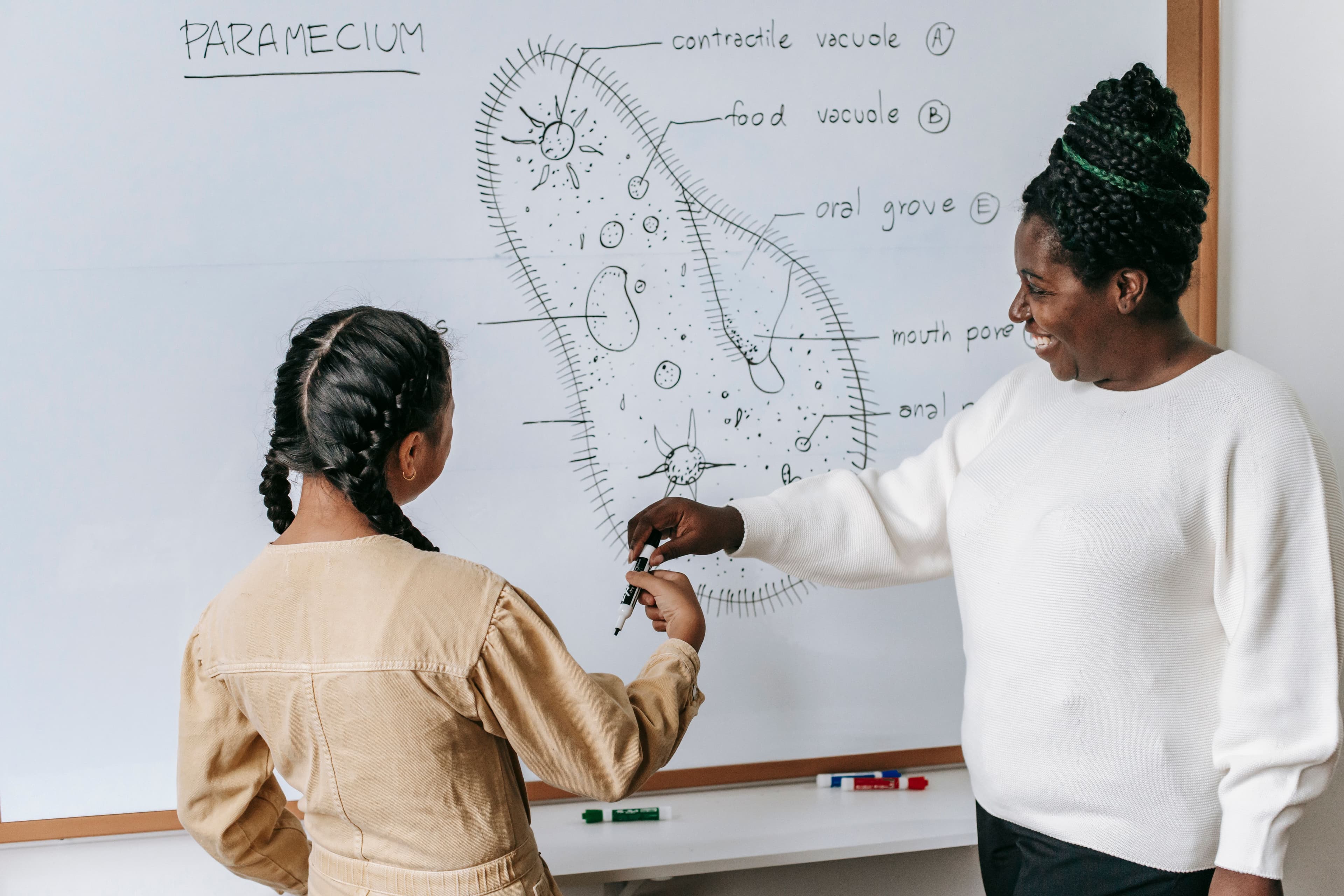
Visual Learning Techniques Backed by Science
Visual Learning Techniques Backed by Science
Introduction
Think about the last time you assembled furniture, learned a new software program, or followed a recipe. Chances are you relied more on diagrams, images, or videos than long blocks of text.
That's because the human brain is naturally wired to process visual information efficiently. While reading and listening are important learning methods, visual representations often make complex ideas easier to understand and remember.
Educational researchers have spent decades studying how people learn, and many findings suggest that combining visual information with written or spoken explanations can improve comprehension and retention. Today, artificial intelligence is making these visual learning techniques more accessible by automatically generating diagrams, summaries, and flowcharts from educational content.
Why the Brain Responds to Visual Information
The brain processes images much faster than text.
Instead of decoding words one by one, visual information allows us to recognize:
• Patterns
• Relationships
• Sequences
• Shapes
• Spatial organization
This doesn't mean visuals replace reading. Instead, they provide another way for the brain to organize and understand information.
When visuals and explanations work together, learning often becomes more efficient.
The Dual Coding Theory
One of the most influential ideas in educational psychology is Dual Coding Theory.
This theory suggests that people remember information more effectively when it is presented using both words and visuals.
For example:
Reading about the water cycle teaches the concept.
Seeing a diagram of the water cycle helps organize and reinforce that information.
Using both methods creates multiple pathways for recalling information later.
Technique 1: Flowcharts
Flowcharts organize information into logical sequences.
They work particularly well for:
• Scientific processes
• Business workflows
• Programming logic
• Historical events
• Decision making
Instead of memorizing disconnected facts, learners understand how each step connects to the next.
Technique 2: Concept Maps
Concept maps organize related ideas into networks rather than straight sequences.
They're useful for:
• Research
• Essay planning
• Brainstorming
• Comparing theories
• Understanding relationships
Unlike flowcharts, concept maps allow learners to see how multiple ideas influence one another.
Technique 3: Diagrams and Illustrations
Visual diagrams simplify complicated subjects by showing structure instead of description.
Examples include:
• Anatomy diagrams
• Engineering drawings
• Mathematical graphs
• Geographic maps
• Chemical structures
Well-designed visuals reduce the effort required to understand complex information.
Technique 4: Color Coding
Using color strategically can improve organization.
Many students separate information using colors for:
• Definitions
• Examples
• Formulas
• Timelines
• Categories
Color shouldn't replace organization, but it can make reviewing material faster.
Technique 5: AI-Generated Visual Summaries
Artificial intelligence has introduced a new way to study.
Modern AI learning tools can automatically:
• Summarize lectures
• Identify important concepts
• Generate visual flowcharts
• Organize information into knowledge maps
• Highlight relationships between ideas
Instead of manually creating study materials, students receive structured visual summaries within minutes.
Why Visual Learning Improves Memory
Visual learning improves retention because it reduces cognitive overload.
Rather than remembering dozens of isolated facts, learners remember organized patterns.
Visual techniques help students:
• Understand relationships
• Review information faster
• Recall concepts more easily
• Simplify difficult topics
• Build stronger mental connections
This makes visual learning especially effective for subjects with large amounts of interconnected information.
How Biftech Uses Visual Learning
Biftech is built around the idea that learning improves when information is organized visually.
Instead of simply creating transcripts or summaries, Biftech transforms educational videos into interactive flowcharts that help learners explore concepts step by step.
With Biftech, users can:
• Convert educational videos into visual knowledge maps
• Navigate complex topics more efficiently
• Debate ideas with other learners
• Earn rewards for meaningful participation
• Build a searchable knowledge library over time
This combines artificial intelligence with proven visual learning techniques to create a more engaging educational experience.
The Future of Visual Education
As artificial intelligence continues to evolve, visual learning will become even more personalized.
Future AI learning platforms are expected to:
• Generate custom flowcharts for every learner
• Adapt diagrams based on learning progress
• Connect related concepts across subjects
• Build interactive knowledge graphs
• Create visual quizzes and study paths automatically
Instead of static notes, students will work with dynamic visual knowledge systems that grow alongside their understanding.
Conclusion
Scientific research continues to support the value of visual learning as part of an effective study strategy. Flowcharts, concept maps, diagrams, and AI-generated summaries help organize information in ways that make it easier to understand, review, and remember.
While no single learning technique works for everyone, combining visual learning with reading, discussion, and active recall creates a stronger foundation for long-term retention.
As educational technology advances, AI-powered visual learning tools will continue making complex knowledge easier to organize and understand.
Frequently Asked Questions
What is visual learning?
Visual learning is a study method that uses diagrams, flowcharts, images, charts, and other visual aids to improve understanding and memory.
Is visual learning backed by science?
Yes. Research in educational psychology, including theories like Dual Coding Theory, suggests that combining visuals with verbal information can improve learning and recall.
Are flowcharts effective for studying?
Yes. Flowcharts help organize information into logical sequences, making complex topics easier to understand and review.
Can AI create visual study materials?
Yes. Modern AI tools can generate summaries, concept maps, flowcharts, and other visual learning resources from lectures and educational videos.
How does Biftech support visual learning?
Biftech transforms educational videos into interactive flowcharts that help learners organize knowledge, visualize relationships between concepts, and collaborate with others through meaningful educational discussions.
Learn Smarter with Biftech
Biftech transforms educational videos into interactive visual flowcharts that make learning more visual, organized, and engaging. Explore connected ideas, strengthen your memory, and build lasting knowledge through AI-powered visual learning.